+91 89399 94244WhatsApp us

Home › Tests › PGT

TESTS · PGT (EMBRYO TESTING)

PGT is sold as a guarantee. It answers one question.

PGT tests a few cells from an IVF embryo for one specific genetic question before it is transferred. For a few couples it is exactly the right test; for many it adds cost without adding a baby.

  • Only possible with IVF
  • Embryos frozen while you wait
  • Results in about 1 to 2 weeks
  • Counselling before you start
PGT (embryo testing)Diagram of a day-5 blastocyst showing the outer layer where a few cells are biopsied, and the three types of PGT and the question each answers. 1 Outer layer (future placenta), A few cells taken here; 2 Inner cell mass (future baby), Not touched; 3 PGT-M, One known family gene. PGT-SR: a parent's rearrangement; 4 PGT-A, The number of chromosomes.1Outer layer (futureplacenta)A few cells taken here2Inner cell mass(future baby)Not touched3PGT-MOne known family gene.PGT-SR: a parent'srearrangement4PGT-AThe number of chromosomesPGT (embryo testing)Diagram of a day-5 blastocyst showing the outer layer where a few cells are biopsied, and the three types of PGT and the question each answers. 1 Outer layer (future placenta), A few cells taken here; 2 Inner cell mass (future baby), Not touched; 3 PGT-M, One known family gene. PGT-SR: a parent's rearrangement; 4 PGT-A, The number of chromosomes.1Outer layer (futureplacenta)A few cells taken here2Inner cell mass (futurebaby)Not touched3PGT-MOne known family gene.PGT-SR: a parent'srearrangement4PGT-AThe number of chromosomes
  1. Outer layer (future placenta) — A few cells taken here
  2. Inner cell mass (future baby) — Not touched
  3. PGT-M — One known family gene. PGT-SR: a parent's rearrangement
  4. PGT-A — The number of chromosomes
Diagram of a day-5 blastocyst showing the outer layer where a few cells are biopsied, and the three types of PGT and the question each answers · Test · measure, then meaning
On this page
  1. How to read your report
  2. What the result changes
  3. Do you need this test?
  4. Your first visit
  5. Questions patients ask
  6. Inside the lab.
  7. In their words, not ours.
  8. Where to next
  9. Ask what PGT would change before you pay for it.
01

What is PGT in IVF?

PGT (pre-implantation genetic testing) takes a few cells from an embryo made by IVF and tests them for a specific genetic problem before the embryo is transferred.

Some embryos carry a chromosome in the wrong number, or a faulty gene passed down from a parent. PGT tells the embryology team which embryos are unaffected on that one test. It needs an embryo outside the body, so it is only possible with IVF, not with natural conception. The older name PGD means the same as PGT-M.

02

What is the difference between PGT-A, PGT-M and PGT-SR?

PGT-M tests for one known inherited condition, PGT-SR for a parent's chromosome rearrangement, and PGT-A for the number of chromosomes.

PGT-M is built around your family's specific gene change, such as beta thalassaemia, which is common in India, or sickle cell disease or spinal muscular atrophy. PGT-SR is for a parent who carries a balanced translocation, usually found on a karyotype blood test. PGT-A counts chromosomes; it does not look at individual genes. Each test answers only its own question.

Karyotype test
03

How is PGT done during an IVF cycle?

Embryos are grown to day 5 or 6, a few cells are taken from the outer layer, and every biopsied embryo is frozen while the lab tests the cells.

For PGT-M and PGT-SR, counselling and a custom lab test come first, which can take several weeks. Then a normal IVF cycle, usually with ICSI so stray sperm cannot confuse the result. Only embryos that reach blastocyst can be tested. Results usually take 1 to 2 weeks, and a suitable embryo is transferred in a later, prepared cycle.

04

Who is PGT for?

PGT-M and PGT-SR are for couples with a known genetic condition or chromosome rearrangement; PGT-A is considered only in selected cases, discussed with you.

In India the ART (Regulation) Act 2021 allows embryo testing to screen for known, pre-existing, heritable or genetic diseases. At Jananam, PGT-A may be discussed from 38, or after repeated failed transfers or miscarriages, weighing what it can and cannot do for you. Outside these situations the case for testing is much weaker.

Honest note

The Pre-implantation Genetic testing shall be used to screen the human embryo for known, pre-existing, heritable or genetic diseases only. (The ART (Regulation) Act, 2021, section 25)


05

What can PGT not tell you?

PGT does not make embryos better, does not test for every condition, and does not guarantee a healthy baby.

It only chooses among the embryos you already have, so a cycle with few embryos may end with none to transfer. Some embryos are mosaic (a mix of normal and abnormal cells), and some give no result. For most patients PGT-A does not raise the chance of a baby, though it may lower the chance of miscarriage. Routine pregnancy screening is still needed.

Honest note

PGT-A is rated red for increasing the chance of a baby for most patients, and green for reducing the risk of miscarriage. (HFEA add-on ratings)

06

Is PGT worth it?

PGT is worth it when it answers a question that changes your decision, such as a known family condition or a parent's translocation.

ASRM advises against using PGT-A for every IVF patient. What decides the cost is the type of PGT, the lab set-up for your family's gene, how many embryos are tested, and the extra freezing and frozen transfer. We give you that in writing before you decide. If a tested embryo is normal, one embryo is transferred.

Honest note

Single embryo transfer is preferred for tested euploid embryos at any age, and usually under 38 with a good blastocyst. (Dr Vani Sundarapandian)

How to read your report

Bring your PGT report. We read it with you, embryo by embryo, before any decision.

Dr Vani Sundarapandian at her desk at Jananam Neelankarai
Dr Vani, at her desk

Euploid (or 'normal', 'no aneuploidy detected')

A whole chromosome was extra (+) or missing (-) in the cells tested.

Reference
Category, not a number.
If outside
Not usually transferred. We explain what was found; it is common, and it is not anyone's fault.

Mosaic (low-level or high-level)

Part of a chromosome, not a whole one, looked extra or missing.

Reference
Category; lab-defined.
If outside
Discussed with genetic counselling before any transfer decision.

Unaffected / Carrier / Affected (PGT-M)

Whether the embryo inherited your family's gene change, and how many copies.

Reference
Category, specific to your family's test.
If outside
An unaffected embryo, or often a carrier, can be transferred. Affected embryos are not.

Normal or balanced / Unbalanced (PGT-SR)

Whether the embryo inherited the rearranged chromosomes in a balanced way.

Reference
Category, not a number.
If outside
Normal or balanced embryos can be transferred; unbalanced ones are not.

No result (or 'non-informative', 'failed amplification')

The lab could not read the cells.

Reference
No reference value.
If outside
The embryo may be re-biopsied, or the choice discussed with you. ESHRE accepts an untested PGT-A embryo only with fully informed consent.

Sex chromosomes

The embryo's sex is not disclosed, because determining it is illegal in India.

If outside
Only an embryo's sex-linked disease status can be reported, where that is the reason for testing.

Aneuploid (e.g. '+16' or '-22', trisomy or monosomy)

Segmental gain or loss (e.g. 'del(5p)')

Source of ranges: Categories and thresholds follow the testing lab's report and the ESHRE PGT Consortium good practice recommendations (2020). Labs word reports differently.

What the result changes

IfAt least one normal, balanced or unaffected embryo

A single embryo is thawed and transferred in a prepared frozen cycle. Others stay frozen for later.

What that means

IfNo embryo suitable for transfer

We review the cycle with you honestly: another collection, a change of plan, or donor eggs where your own eggs are unlikely to work.

What that means

IfMosaic or segmental result only

Genetic counselling before any decision. Nothing is transferred or discarded without your informed agreement.

What that means

IfNo result for an embryo

Re-biopsy is sometimes possible. Otherwise we discuss the choice with you in writing.

IfStill deciding whether you need PGT

A karyotype for both partners and a family history often answer that first.

What that means

Do you need this test?

Do any of these sound like you?

  • We are both carriers of thalassaemia, or another condition runs in the family
  • A karyotype showed one of us carries a translocation
  • We have had several miscarriages
  • Our good embryos have failed more than once
  • Another clinic has offered PGT-A for every embryo
Yes, ask Dr Vani's team

No known genetic risk and under 38? PGT is unlikely to change your plan. Start with IVF itself.

Your first visit

1

Talk

Family history, carrier or karyotype results, past miscarriages and transfers.

2

Test

Karyotype or carrier tests for both of you if not done, and genetic counselling.

3

Plan

Whether PGT changes your decision, which type, and the costs in writing.

4

Treat

IVF with blastocyst biopsy and freezing, then a frozen transfer of one suitable embryo.

Questions patients ask

Does PGT guarantee a healthy baby?

No. PGT answers one specific genetic question and cannot detect every condition or problems that arise later in pregnancy. Routine pregnancy screening is still needed.

Is PGT-A worth it?

For most IVF patients PGT-A does not raise the chance of a baby, and ASRM does not recommend it for everyone. It may be discussed in selected cases, such as from 38 or after repeated loss, with its limits explained.

Is PGT legal in India?

Yes, the ART (Regulation) Act 2021 allows embryo testing to screen for known, pre-existing, heritable or genetic diseases. Using it to choose an embryo's sex is illegal.

Can PGT be used to choose a boy or a girl?

No. Sex selection is prohibited in India under the PCPNDT Act, 1994 and the ART Act, 2021, and no clinic may offer it.

Does the biopsy harm the embryo?

The cells come from the outer layer that forms the placenta, not the part that becomes the baby, and the HFEA describes the test as very safe. It is still a procedure on a living embryo, which is one reason it is not offered to everyone.

What decides the cost of PGT?

The type of PGT, the lab set-up needed for your family's gene, the number of embryos tested, and the extra freezing and frozen transfer decide the cost. We give it to you in writing before you start.

What happens to embryos that are not transferred?

Unaffected embryos can stay frozen for later use. What happens to affected embryos is your decision, made with counselling and written down before the cycle begins.

Off the Record

Not the question you had?

The questions people don't ask with their partner sitting beside them, answered by Dr Vani Sundarapandian.

under the table, so he can't see

  1. He won't even come in for a test. How do I ask without breaking him?Dr Vani answered · watch ↗
  2. What if I can't perform on the day?Dr Vani answered · watch ↗
  3. Is it his “only on weekends” drinking? I can't say it to his face.Answered next · watch ↗

Inside the lab.

What an embryo biopsy is, and who it is suggested for. It is not part of every cycle, and these explain where it is considered.

All of Dr Vani’s videos →

In their words, not ours.

4.9from 1,400+ Google reviewsSee all reviews on Google

The accommodation, food, the 24x7 support is highly appreciated. Dr Vani was always so reassuring and for us it must have taken more effort as we always troubled her with too many questions.

Sources (5)
  1. HFEA (UK fertility regulator): Pre-implantation genetic testing for aneuploidy (PGT-A) (treatment add-on rating)
  2. HFEA (UK fertility regulator): Pre-implantation genetic testing for monogenic disorders (PGT-M) and chromosomal structural rearrangements (PGT-SR)
  3. ASRM: The use of preimplantation genetic testing for aneuploidy: a committee opinion (2024)
  4. ESHRE / Oxford Academic: ESHRE PGT Consortium good practice recommendations for the organisation of PGT (2020)
  5. Government of India (via PRS Legislative Research): The Assisted Reproductive Technology (Regulation) Act, 2021

Where to next

Ask what PGT would change before you pay for it.

Tell us your family history and what you have been offered. Janvi, Jananam's companion for fertility treatment, replies straight away.

Chat on WhatsAppCall +91 89399 94244

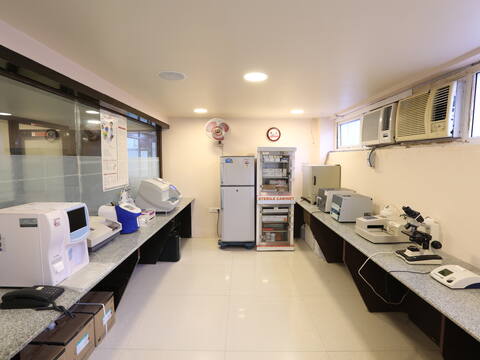
The pathology lab at Jananam Fertility Centre, Neelankarai
the pathology lab, at Neelankarai