Abstinence (days)
Days since your last ejaculation before the sample.
- Reference
- WHO 2021 method: 2 to 7 days
- If outside
- Outside this window, the count or movement can read low. Repeat inside it before acting.
 +91 89399 94244WhatsApp us
Home › Tests › Semen analysis
TESTS · SEMEN ANALYSIS
A semen analysis looks at one fresh sample under the microscope: how much there is, how many sperm, how well they move and their shape. It is one of the simplest, cheapest tests in fertility care, and it can change the whole plan for a couple.
A semen analysis measures the volume of one sample and the number, movement and shape of the sperm in it, and it is the main test for male fertility.
A male factor is part of the problem in many couples, so testing only the woman is not an assessment. The test is simple, painless and quick. Doing it first can save a woman months of tests and treatment that were never going to help.
Give the sample by masturbation into the sterile pot from the lab, after 2 to 7 days without ejaculation, and collect all of it.
The first part of the ejaculate carries most of the sperm, so losing it is the commonest reason for a falsely low count. Do not use lubricant, saliva or an ordinary condom; they harm sperm. Tell us about any fever, illness or antibiotics in the last three months.
Any day of the week that falls 2 to 7 days after your last ejaculation, and not within a few weeks of a fever if you can help it.
Less than 2 days lowers the count; more than 7 lowers movement. Sperm take about two to three months to be made, so today's sample partly reflects how you were two months ago. A high fever can pull a result down for weeks afterwards.
Sperm numbers change a lot in the same man from one sample to the next, so an abnormal result is repeated before anything is decided.
A fever, a course of antibiotics, heat, a difficult collection or a delay on the way to the lab can all make a report look worse than you are. The repeat is usually done a few weeks to 3 months later. A normal report does not promise fertility either: it does not measure DNA damage or whether sperm can fertilise an egg.
The WHO limits are the lowest 5% of results from men whose partners conceived within a year. Five in every hundred of those fertile men scored below each line. A result under the line puts you in the lower part of a fertile range. It is not a diagnosis of infertility. (WHO laboratory manual, 6th edition, 2021)
No. Most home kits give only a rough count, and the count alone misses movement, shape, volume and signs of infection.
A normal home result with poor movement is a common trap. A lab analysis following WHO methods is the test a doctor can act on. What you can change while you wait for a repeat is lifestyle.
Lifestyle, led by a healthy weight. Then smoking, alcohol, about seven hours of sleep, stress, folic acid, and correcting thyroid, diabetes, blood pressure and vitamin D. (Dr Vani Sundarapandian, on the factors couples can influence most)
Bring the full printed report, and any older ones. We read it with you, line by line.
Units: Some labs still print the older WHO 2010 (5th edition) limits: volume 1.5 mL, 15 million per mL, 39 million total, 40% moving, 32% moving forward, 58% alive, 4% normal forms. The same sample can be flagged by one lab and not another purely because of the edition. Check which edition is printed on your report; if it is not, ask.

Days since your last ejaculation before the sample.
How much fluid the whole sample contains.
How acid or alkaline the semen is.
Semen starts as a gel and turns liquid so sperm can swim.
How many sperm are in each millilitre.
Concentration multiplied by volume: all the sperm in the sample.
The share of sperm that move at all.
The share of sperm swimming forward, the ones that can reach an egg.
Sperm that twitch in place, and sperm that do not move.
The share of sperm that are alive, checked when few are moving.
The share of sperm with a normal head, midpiece and tail under strict criteria.
White blood cells, which can signal infection or inflammation.
Sperm stuck to each other.
The lab's one-word summary, such as normozoospermia, oligozoospermia, asthenozoospermia, teratozoospermia, OAT or azoospermia.
Source of ranges: Reference limits: WHO laboratory manual for the examination and processing of human semen, 6th edition (2021). These are the 5th centile of fertile men, not targets and not a prediction of pregnancy.
IfWithin the WHO limits
Attention moves to her tests and to how you are trying. If there are repeated failed cycles or miscarriages later, extra sperm tests may be discussed then.
What that meansIfMildly below the limits
We look for a cause (heat, infection, a varicocele, weight, smoking) and repeat the test after correcting it. With her tests normal, IUI can be a sensible first step.
What that meansIfWell below the limits (low count or poor movement)
A hormone profile and an examination. If counts are very low, genetic tests. ICSI can work with very few sperm.
What that meansIfNo sperm seen (azoospermia)
Confirmed on a spun-down sample and a second test. Then hormones, examination and a scan tell us if sperm are made but blocked, or not made; sperm can often be retrieved surgically.
What that meansIfVery low volume
A urine test after ejaculation checks whether semen is going backwards into the bladder, and we look for a blockage.
What that meansIfRaised pus cells
A culture and treatment of any infection, then a repeat analysis.
What that meansDo any of these sound like you?
How long you've tried, any illness, heat or medicines, and any old semen reports.
A semen analysis after 2 to 7 days of abstinence, the same week as her tests.
His report read next to hers. Repeat, treat a cause, or move to the right treatment.
Lifestyle and a repeat, IUI, or ICSI, depending on both of you, not on one number.
A report is within the WHO 2021 reference limits if it shows at least 1.4 mL of semen, 16 million sperm per mL (39 million in total), 42% moving, 30% moving forward and 4% normal forms. These are reference points from fertile men, not a pass mark, and a result below one line is not a diagnosis.
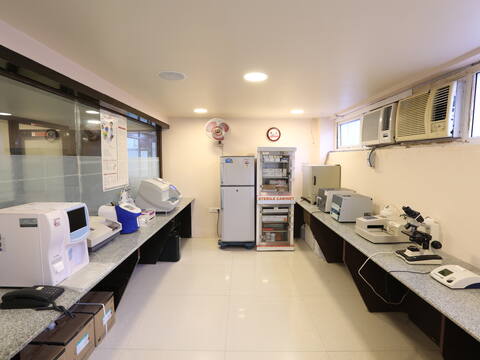
Jananam takes semen samples at its Neelankarai centre on ECR and its Thiruporur clinic, in a private room. Message us on WhatsApp to book a time and get the preparation steps.
Two to seven days without ejaculation is the WHO 2021 recommendation. Fewer than 2 days can lower the count, and more than 7 can lower movement.
Yes, if the first result is abnormal it is repeated, usually a few weeks to 3 months later, before any conclusion. Two samples are usually enough.
It is better to give the sample at the clinic, because it must reach the lab within an hour at close to body temperature.
Very rarely. Even a severely abnormal report can usually be treated with his own sperm, including with ICSI or sperm retrieved surgically.
Yes, a recent semen analysis from a lab that follows WHO methods is usually accepted; send the full report before you travel. Dr Vani's team will tell you if a repeat is needed in Chennai.
Often, partly: stopping smoking and tobacco, cutting alcohol, treating infection, avoiding heat and reaching a healthy weight all help. Sperm take about three months to be made, so a repeat test after three months shows the change.
Special thanks to Dr. Vani mam for her guidance and support throughout our journey.
All the sisters here are truly knowledgeable, and they explain about the medicines and course of the treatment clearly. Also, would like to thank Dr Mangalam for her support and guidance to us whenever needed.
Book his semen analysis or send a report you already have. Janvi, Jananam's companion for fertility treatment, replies straight away.
Chat on WhatsAppCall +91 89399 94244
Sex selection is prohibited in India under the PCPNDT Act, 1994 and the ART Act, 2021.